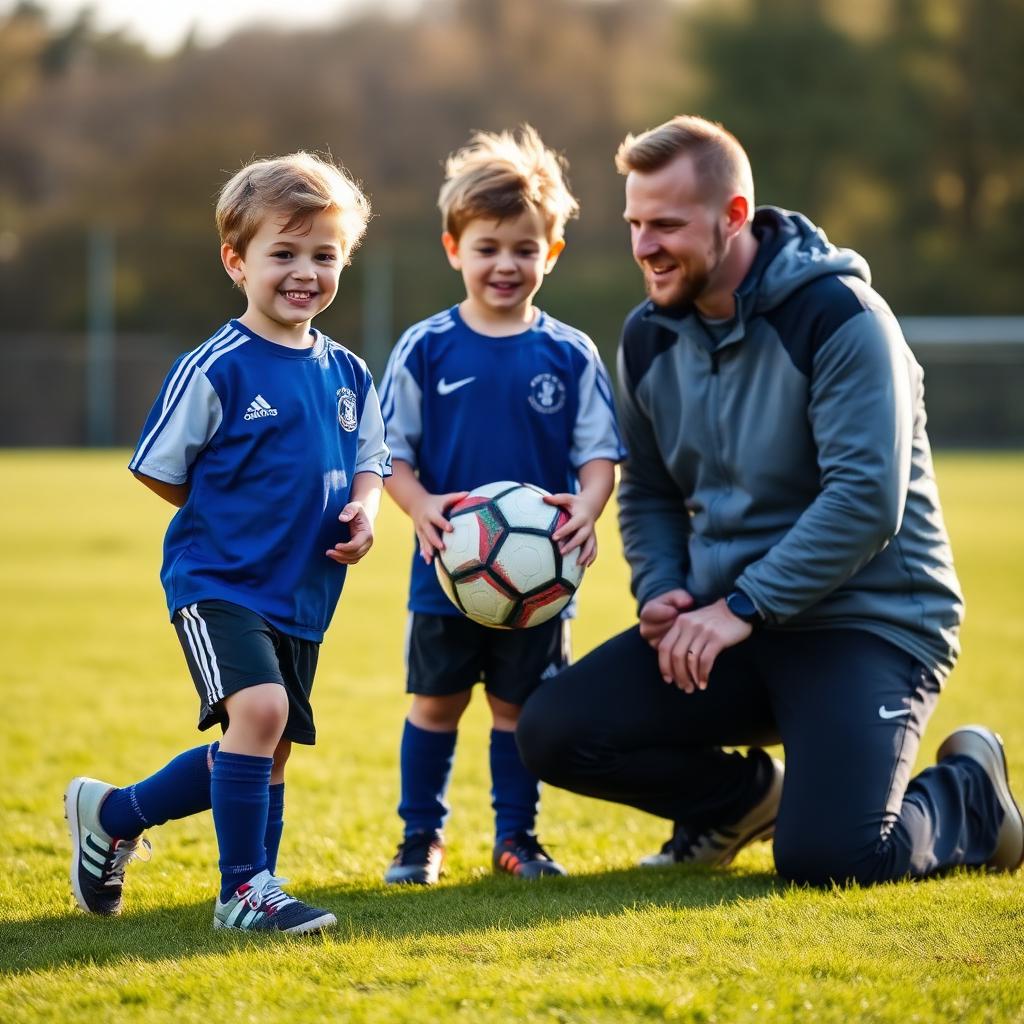

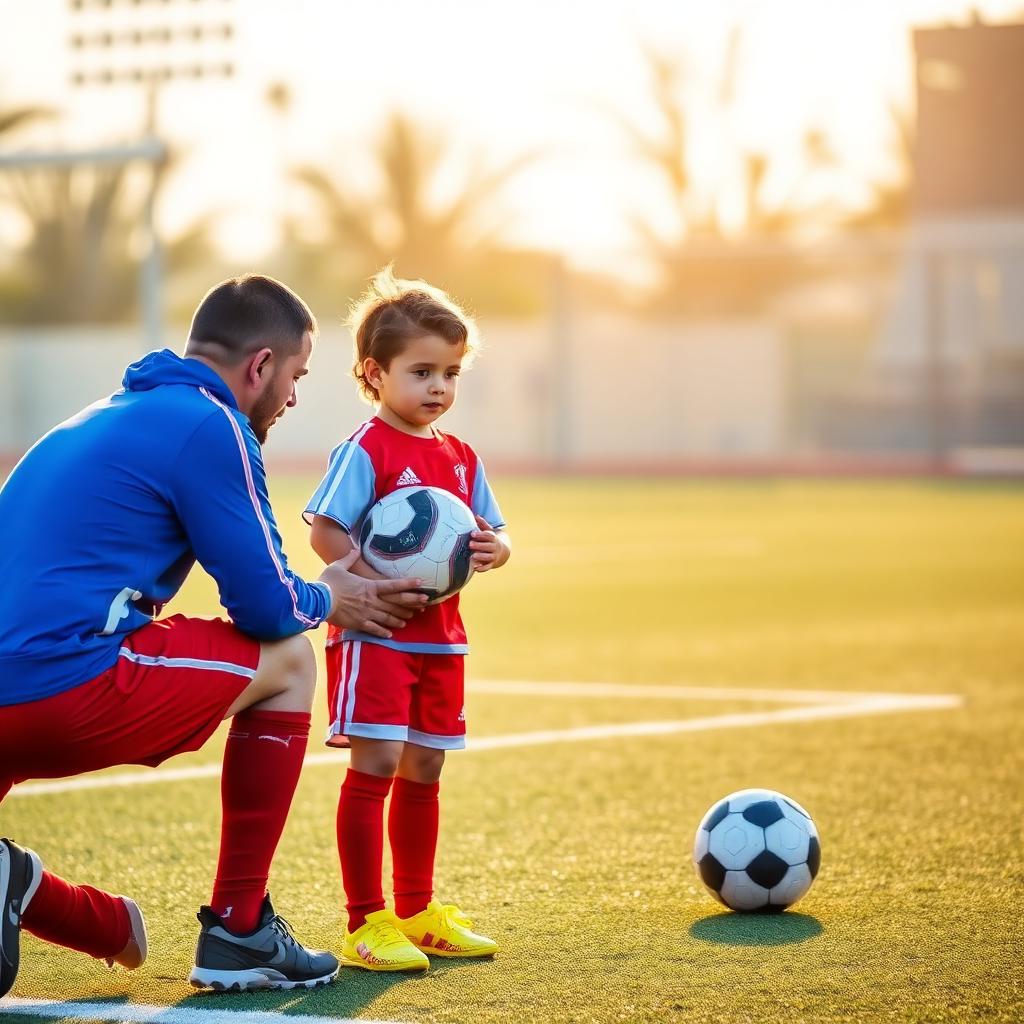
Your child's first football trial is a bigger deal for them than for you — and it's a bigger deal for you than you're admitting. This is what actually happens, what to bring, how coaches actually assess a first-timer, and — most importantly — what to say to your child before you drop them off and after you pick them up.
What to bring
- Comfortable sports clothes (t-shirt and shorts) — no need to buy a full kit before you've committed to an academy.
- Trainers or astro-turf boots. Studded boots aren't necessary for a first session and can actually be dangerous on the wrong surface.
- Shin pads. Optional at 4–6, sensible from 7 upwards. Any sports shop stocks basic pairs for under AED 40.
- A full water bottle. Dubai heat doesn't forgive dehydration, even indoors.
- A hat and sunscreen for outdoor daytime sessions.
- A snack for after — not before. Ten minutes into a session on a full stomach is when kids feel sick.
What actually happens in a trial session
At most reputable academies, a trial is just a regular session. Your child joins the age-group session for the day, the coach makes sure they're welcomed, and they participate in the same warm-up, drills and small-sided games as everyone else. There's no test, no cuts, no separate assessment corner. That's not how good youth football works.
What the coach is quietly watching: does the child look happy, do they engage with instructions, do they interact with other kids, and do they show basic movement patterns (running, changing direction, kicking with balance). Technical ability is almost irrelevant at a first trial — coaches expect none.
How to talk to your child before the trial
Under-sell it. Say it's a chance to try something new and meet the coach, nothing more. Do not say 'this is important' or 'do your best.' Both create pressure that shuts kids down. If they ask what happens if they don't like it, tell them the truth: they don't have to go back.
If your child is anxious, arrive 10 minutes early so they can see the pitch and meet the coach one-on-one before the group arrives. That five-minute buffer eliminates most first-session nerves.
How to behave during the session
Stand well back. Do not coach from the touchline. Do not call your child's name during a drill. Do not compare them out loud to other kids. The parents who ruin trials for their own children are the ones who forget that they're not part of the session. Bring your phone if you need to look busy — but be present enough that your child can see you when they glance over.
How to talk to your child after the trial
Ask one question: 'did you enjoy it?' Nothing else. Not 'how did you do', not 'did the coach say anything', not 'were you better than the other kids.' Just enjoyment. If the answer is yes, sign up. If the answer is no, ask why, once, and take the answer at face value. Try one other academy, or wait a few months and try again.
What to ask the coach afterwards
- Would this age group be the right fit, or is there a different session that might suit better?
- Roughly how many kids will be in the group each week, and with how many coaches?
- What does a typical term look like for this age group?
- Is there a pathway for my child as they grow?
You're not interviewing them — you're checking that the answers match what you saw on the pitch. A coach who's confident in their programme will be relaxed answering all four.
One last thing
If the coach doesn't come and speak to you at the end of the session, that tells you something. Not every academy trains coaches to do this well — the ones that do value your feedback as much as your child's experience. Trust that signal.